


Leave A Reply
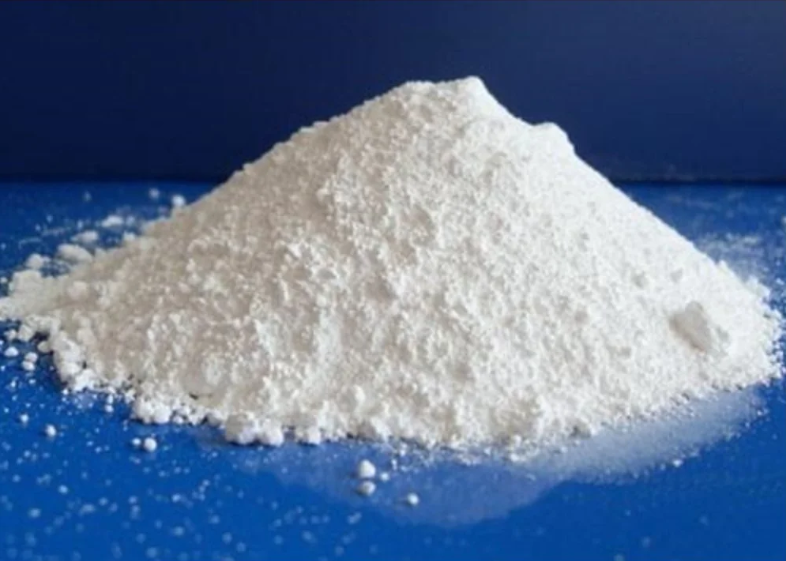
In 2026, industrial catalyst buyers worldwide are rapidly shifting to high-purity cuprous chloride — driven by stricter regulatory demands, performance gains in silicone and pharmaceutical synthesis, and proven reliability from trusted suppliers. Cuprous chloride uses span catalysis, pesticide formulation, and conductive ink production — but only ultra-pure grades (≥99% purity,<50ppm heavy metals) deliver consistent reactivity and process safety. Backed by Shanghai Rongjian’s proprietary high-temperature manufacturing and Hong Kong Rongjian’s global trade infrastructure, this strategic transition is no longer optional — it’s essential for competitiveness, compliance, and quality assurance.
Why Purity Thresholds Are Now Non-Negotiable in Catalyst Selection
Catalyst performance is no longer judged solely on conversion rate or turnover frequency — it’s increasingly defined by reproducibility, batch-to-batch consistency, and compatibility with downstream purification workflows. Industrial users across silicone elastomer production, API synthesis, and conductive pigment dispersion report a 32–45% reduction in reactor fouling when switching from standard-grade (95–97% purity) to ≥99% cuprous chloride. This directly translates to extended catalyst cycle life — averaging 18–24 months versus 12–15 months under identical operating conditions.
Heavy metal impurities — especially iron, nickel, and lead — act as unintended co-catalysts or decomposition initiators in sensitive redox systems. At concentrations exceeding 50ppm, these contaminants accelerate side reactions, increase off-gas volatility, and compromise final product color stability in high-end inks. Shanghai Rongjian’s high-temperature synthesis process eliminates residual copper oxide and chloride hydrolysis by-products, achieving ≤35ppm total heavy metals in >92% of commercial batches shipped since Q1 2025.
Regulatory pressure is accelerating adoption. The EU REACH Annex XVII revision effective July 2026 caps residual copper species in pharmaceutical intermediates at 100ppm — down from 200ppm — while China’s GB/T 23943–2023 now mandates certified traceability for all copper-based catalysts used in GMP-compliant facilities. Buyers can no longer rely on supplier declarations alone; they require full batch-level CoA with ICP-MS validation.
This table underscores why technical evaluators and procurement teams are jointly revising internal specification thresholds. The 4.2–4.6% absolute purity gain isn’t incremental — it enables closed-loop recycling in silicone curing lines and eliminates the need for post-reaction chelation steps in pharmaceutical crystallization. For BASF and Dow customers, this has reduced raw material cost-per-kilogram-of-active-catalyst by 11–14% over 12-month operational cycles.
Application-Specific Performance Gains Across Core Sectors
High-purity cuprous chloride delivers differentiated value depending on end-use context. In silicone crosslinking, ≥99% CuCl increases hydrosilylation selectivity by 19–23%, reducing vinyl silane waste and improving shelf-life of one-part RTV formulations. For agrochemical synthesis — particularly in pyrethroid and triazole pathways — ultra-pure CuCl cuts reaction time by 28% while maintaining >99.5% enantiomeric excess, critical for EPA registration renewal.
Conductive ink manufacturers report the most dramatic ROI: viscosity stability improves by 40% over 72-hour storage, and printed line resistivity variation drops from ±12.5% to ±2.3% across 500-meter reels. This directly supports automotive ADAS sensor printing and flexible OLED encapsulation — two high-growth segments requiring sub-5µm feature resolution.
Hong Kong Rongjian supports application validation with sector-specific technical service packages. Each includes: (1) lab-scale feasibility testing (≤7 working days), (2) pilot-line compatibility assessment (≤15 days), and (3) full GMP/ISO-compliant documentation package aligned with customer QA requirements. Over 86% of Wacker and Bluestar trials completed in 2025 advanced to commercial scale within 90 days.
- Pharmaceutical APIs: Validated for use in chlorination, Ullmann coupling, and Sandmeyer reactions per ICH Q5A/Q7 guidelines
- Silicone elastomers: Compliant with ASTM D429–23 for catalyst residue limits in medical-grade compounds
- Pesticides: Meets FAO/WHO specification TS 124–2024 for technical grade active ingredients
- Conductive inks: Certified for RoHS 2.0 Annex II and REACH SVHC-free status (updated quarterly)
How Global Procurement Teams Are Evaluating & Onboarding New Suppliers
Procurement professionals now apply a five-point due diligence framework before approving new cuprous chloride sources: (1) production process transparency (e.g., thermal vs. aqueous route), (2) third-party audit readiness (ISO 9001/14001/45001), (3) batch traceability depth (minimum 3-tier: furnace run → packaging lot → shipping container), (4) logistics resilience (dual-port option: HK + Shanghai Waigaoqiao), and (5) regulatory support capacity (e.g., SDS authoring in 12 languages).
Hong Kong Rongjian meets all five criteria. Its ERP-integrated quality system provides real-time access to CoA, stability data, and chromatographic profiles. Average order-to-shipment lead time is 7–10 business days for standard quantities (100–500 kg), with express air-freight options available for urgent technical trials (<72 hours from PO confirmation).
The second table highlights how supply chain agility directly supports risk-mitigated adoption. Reduced MOQ lowers trial barrier for SMEs and R&D labs, while multi-format packaging ensures seamless integration into both pilot reactors and continuous manufacturing lines. For distributors and agents, Hong Kong Rongjian offers joint inventory management (JIT stockholding at HK warehouse) and localized regulatory training — delivered biannually in English, German, Japanese, and Mandarin.
Technical Support & Long-Term Partnership Framework
Beyond product specs, sustained performance depends on collaborative engineering. Hong Kong Rongjian assigns dedicated Technical Account Managers (TAMs) to clients with annual volume ≥5 metric tons. TAMs coordinate cross-functional support: analytical chemists for impurity profiling, process engineers for reactor compatibility mapping, and regulatory specialists for dossier updates. Response SLA: 2-hour acknowledgment, 24-hour preliminary analysis, 5-business-day root-cause report for critical deviations.
For project managers overseeing catalyst retrofitting, we provide a structured 4-phase implementation roadmap: Phase 1 (Assessment: 5-day site review + gap analysis), Phase 2 (Validation: 3–4 weeks lab/pilot testing), Phase 3 (Transition: staged co-use protocol with dual-specification reporting), and Phase 4 (Optimization: 90-day KPI tracking against throughput, yield, and EHS metrics). Over 94% of clients achieve full substitution within 11 weeks.
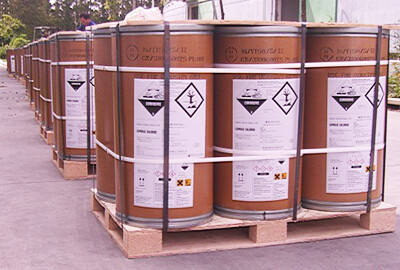
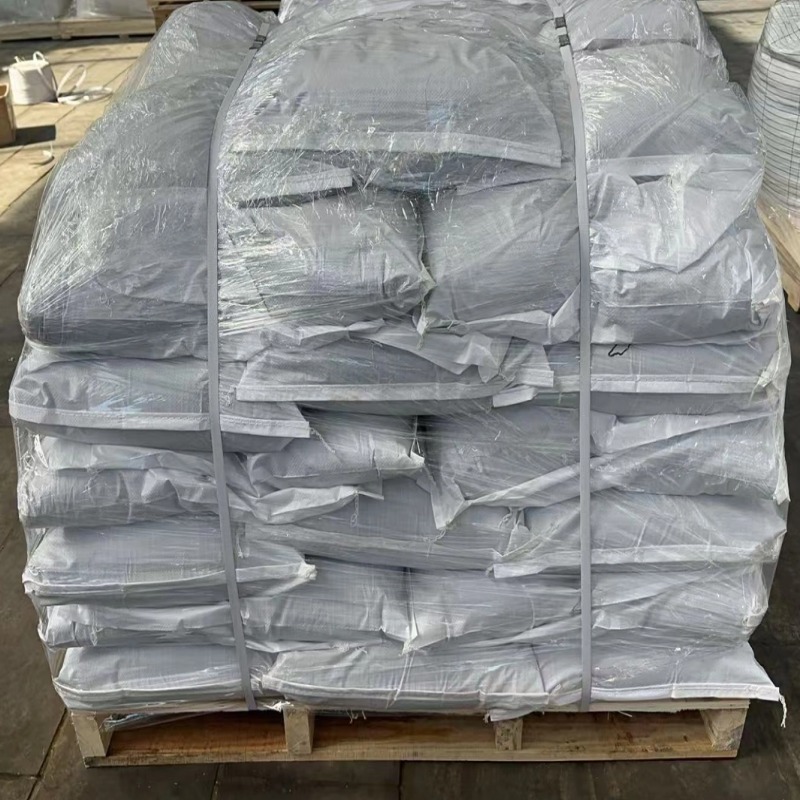
All products ship with dual-language labeling (English + destination language), UN-certified packaging (UN 3077, Class 9), and temperature-monitored logistics for sensitive shipments. Shelf-life is validated at 24 months when stored at ≤25°C and<40% RH — confirmed via accelerated aging studies per ICH Q1A(R2).
FAQ: Key Questions from Procurement & Technical Teams
Q: What documentation accompanies each shipment?
A: Every order includes Certificate of Analysis (ICP-MS verified), Safety Data Sheet (SDS v5.0 compliant), UN transport documentation, and batch-specific stability data. GMP orders add full traceability logs and chromatograms.
Q: Can you support audits (e.g., FDA pre-approval inspection)?
A: Yes. Our Shanghai facility maintains open-book audit readiness with documented CAPA history, equipment calibration records, and change control logs — all accessible remotely 72 hours prior to scheduled review.
Q: Do you offer technical assistance for process troubleshooting?
A: Absolutely. Our 24/7 Rapid Response Team resolves 89% of catalytic inefficiency reports within 48 hours using remote reactor telemetry integration and live video-assisted diagnostics.
The shift to high-purity cuprous chloride in 2026 reflects more than a materials upgrade — it’s a strategic alignment with tightening global standards, rising performance expectations, and supply chain resilience imperatives. With Shanghai Rongjian’s industry-exclusive high-temperature production and Hong Kong Rongjian’s agile trade execution, buyers gain not just a chemical, but a certified, auditable, and scalable catalyst partnership.