


Leave A Reply
Copper (II) chloride, anhydrous Properties, Uses and Production
Physical and chemical properties
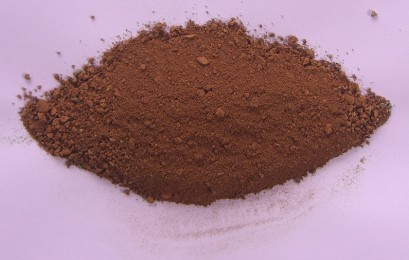
Copper (II) chloride, anhydrous, with the chemical formula CuCl2, is a yellow-brown powder with a relative density of 3.386 (25°C), a melting point of 620°C, and a solubility of 70.6 at 0°C. It is also readily soluble in ethanol and acetone. It readily absorbs moisture from air, transforming into a bluish-green dihydrate, CuCl2·2H2O. CuCl2·2H2O is green, rhombic crystals with a relative density of 2.38. It can be prepared by passing chlorine gas and water through a contact tower containing metallic copper, or by reacting copper carbonate (actually basic copper carbonate) with hydrochloric acid. This hydrate dehydrates at 110°C and can be heated to 140-150°C in a stream of hydrogen chloride to produce anhydrous copper chloride. Further heating anhydrous copper chloride to 993°C decomposes into white cuprous chloride and chlorine gas. X-ray studies have shown that copper chloride is a covalent compound with a planar chain structure.
Very concentrated aqueous copper chloride solutions appear yellow-green, green in concentrated solutions, and blue in dilute solutions. The yellow color is due to the presence of the [CuCl]2- coordination ion, while the blue color is due to the presence of the [Cu(H2O)4]2+ coordination ion. The presence of these two ions results in a green color. Copper chloride is used as a catalyst in many organic reactions (such as hydrocarbon chlorination), a decolorant and desulfurizer for petroleum products, a wood preservative, a mordant in textile printing and dyeing, a disinfectant, a feed additive, and a pigment for glass and ceramics.
Chemical reaction
It reacts with concentrated hydrochloric acid to form tetrachlorocopper(II) acid; it reacts with alkali metal chlorides to form M2[CuCl4] type complex salts. Excess chlorine gas is passed through red-hot copper to obtain the anhydrous salt; copper oxide is dissolved in concentrated hydrochloric acid, concentrated, and crystallized to obtain the dihydrate. Copper chloride reacts chemically with ammonia to form a dark blue copper-ammonia complex, Cu(NH3); reacts with strong bases to form a pale blue flocculent precipitate of copper hydroxide, Cu(OH)2; and reacts with reducing anions such as I- and CN- to form a white precipitate of cuprous iodide, CuI, and a Cu(CN) complex.
Copper (II) chloride, anhydrous can be reduced to red cuprous oxide by reducing agents such as glucose in alkaline solution: 2Cu2++4OH-+C6H12O6─→Cu2O+2H2O+C6H12O7. This reaction can be used to test for diabetes.
use
It is used as a chemical reagent, mordant, oxidant, wood preservative, food additive, disinfectant, and in the manufacture of glass, ceramics, fireworks, and invisible inks. It is also used in the deodorization and desulfurization of petroleum fractions, metal refining, photography, etc.
Catalyst: Copper (II) chloride, anhydrous is often used as a catalyst in organic synthesis, especially in the synthesis of organic chlorides and chloroalkyl compounds. It has strong catalytic performance and fast reaction speed, which can effectively improve reaction efficiency and product purity.
Dye and Pigment Manufacturing: Copper (II) chloride, anhydrous can be used in the manufacture of certain dyes and pigments to provide these products with the desired color and stability.
Electroplating: In the electroplating industry, copper (II) chloride, anhydrous can be used as an additive in electroplating solutions to help form a hard and corrosion-resistant electroplated layer.
Rubber production: Copper (II) chloride, anhydrous is also used in the rubber industry. It can be used as a raw material or additive for certain rubber products to improve rubber properties.
Mordant: Copper (II) chloride, anhydrous can be used as a mordant to fix the dye in textile printing and dyeing, making the dyeing more firm and uniform.
Wood preservatives: Copper (II) chloride, anhydrous has antiseptic properties and can be used for wood preservative treatment to extend the service life of wood.
Other Industrial Applications: Copper (II) chloride, anhydrous can also be used as an oxidant, disinfectant, food additive, and deodorant and desulfurizer for petroleum fractions. It is also used in metal refining, photography and other fields.
Preparation method
Copper (II) chloride, anhydrous can be prepared by the action of hydrochloric acid on copper oxide (CuO) or copper carbonate (actually basic copper carbonate (Cu(OH)2·CuCO3)).
Production method
Pure copper chloride dihydrate (CuCl2·2H2O) is recrystallized with dilute hydrochloric acid to remove the basic salt. It is then dehydrated in a stream of dry hydrogen chloride at 140-150°C until the weight no longer decreases. The resulting anhydrous product is placed in a desiccator filled with concentrated sulfuric acid and sodium hydroxide to remove the hydrogen chloride adhering to the crystals.
category
Toxic substances
Acute toxicity
Oral-rat LD50: 584 mg/kg; Oral-mouse LD50: 233 mg/kg
Flammability hazard characteristics
Do not burn; fire will produce toxic fumes containing copper and chlorides;
Storage and transportation characteristics
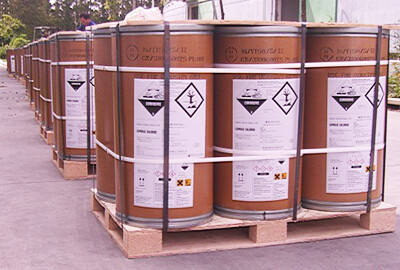
The warehouse is low temperature, ventilated and dry; stored separately from food ingredients
fire extinguishing agent
Water, carbon dioxide, dry powder, sand
Professional Standards
TWA 0.1 mg (copper)/m3; STEL 0.2 mg (copper)/m3
Copper (II) chloride, anhydrous parameters
Copper (II) chloride, anhydrous Chemical Properties:
Copper (II) chloride, anhydrous Safety Information
Related product links: Cuprous Chloride Copper (Il) chloride Dihydrate Copper (Il) carbonate Copper acetate