


Leave A Reply
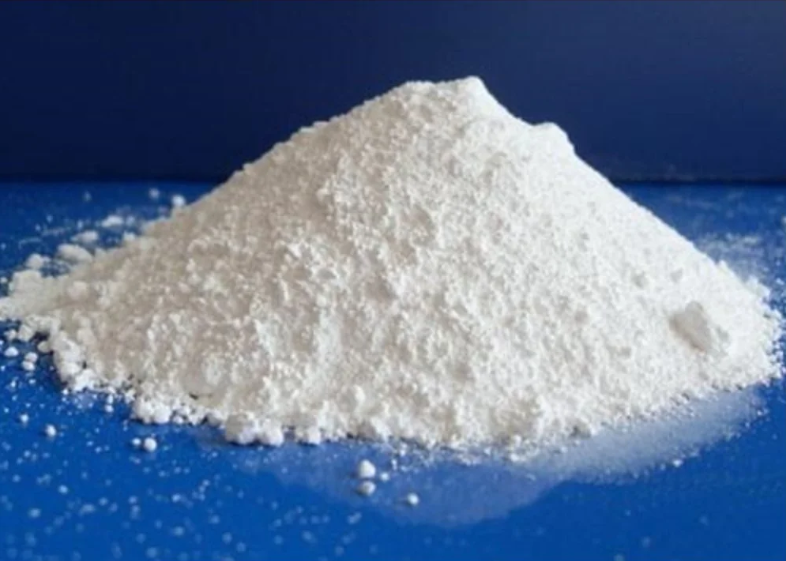
High-grade cuprous chloride is widely used in industries such as organic silicon, biomedicine, pesticides, petrochemicals, chemical reagents, solar energy, etc.
Low-grade cuprous chloride is mainly used in pigments, pesticides, petrochemicals and other industries to meet different needs
Applications of High-Grade Cuprous Chloride
High-grade cuprous chloride, due to its high purity and low impurity content, is primarily used in high-tech fields requiring extremely high catalytic activity and product purity.
1. Silicone Industry
Core Function: Catalyst. Cuprous chloride is the core catalyst component in the direct synthesis of organosilicon monomers (such as methylchlorosilane). Its activity and selectivity directly determine the yield and economic benefits of the main product.
Key Application Monomer: Methylchlorosilane, particularly dimethyldichlorosilane, is the core monomer for the production of nearly all organosilicon products, including silicone oil, silicone rubber, and silicone resin.
Typical Process Flowchart - Rochow Process:
Raw Material Preparation: Silicon powder (Si) and catalyst copper powder (or CuO) are premixed or alloyed. Cuprous chloride is sometimes added as a catalyst precursor or co-catalyst.
Reaction: The mixed raw materials are added to a fluidized bed reactor, and methyl chloride (CH₃Cl) gas is introduced for a gas-solid phase catalytic reaction at approximately 280-320°C.
2CH₃Cl + Si → (CH₃)₂SiCl₂ (Main Reaction)
Catalytic Mechanism: During this process, copper reacts with methyl chloride to form highly active cuprous chloride (CuCl), which acts as an active center on the silicon surface, promoting the formation of Si-C bonds.
Product Separation: The resulting monomer mixture (primarily dimethyldichlorosilane, as well as byproducts such as methyltrichlorosilane and trimethylchlorosilane) is condensed and separated and purified through a series of precision distillation columns.
Why High Grade is Required: Impurities in the catalyst (such as Fe and Ni) can significantly promote side reactions, reduce the selectivity of the main product and the conversion rate of silicon powder, and affect the molecular weight and properties of the final polymer.
2. Biomedicine - Click Chemistry
Core Function: A highly efficient and specific catalyst. It is used to catalyze the copper-catalyzed azide-alkyne cycloaddition reaction (CuAAC), the paradigmatic reaction in click chemistry.
Reaction Equation:
R₁-N₃ + R₂-C≡CH → [CuCl-catalyzed] → R₁-Triazole-R₂
Process Flow (Brief Description):
A molecule containing an azide group (-N₃) and a terminal alkyne (-C≡CH) are dissolved in a suitable solvent (such as a tert-butyl alcohol/water mixture).
High-grade cuprous chloride (usually in combination with a reducing agent such as sodium ascorbate to maintain the Cu(I) valence) is added as a catalyst.
The reaction is completed efficiently and quantitatively within minutes to hours at room temperature or under mild heating, yielding 1,4-disubstituted-1,2,3-triazoles.
After the reaction, the target product can be obtained in high purity through conventional separation methods such as filtration, extraction, and column chromatography.
Why high grade is necessary: Any heavy metal impurities can poison the catalyst, causing reaction failure, or remain in pharmaceutical intermediates, introducing unacceptable safety risks. High-purity CuCl ensures high reaction efficiency, high selectivity, and high product purity, complying with pharmaceutical regulations.
3. High-end pesticides and solar energy industries
High-end pesticides: Serves as a catalyst or key intermediate in the synthesis of highly effective, low-toxic, chiral pesticides. The process typically involves multi-step precision organic synthesis, similar to the pharmaceutical industry, placing stringent requirements on raw material purity.


Solar energy industry: Serves as a precursor material for the absorber layer of copper indium gallium selenide (CIGS) thin-film solar cells.
Elements such as Cu, In, Ga,and Se are typically deposited on a substrate through co-evaporation or sputtering. High-grade CuCl is one of the key raw materials for ensuring thin-film uniformity, purity, and photoelectric conversion efficiency.
Applications of Low-Grade Cuprous Chloride
Low-grade cuprous chloride is primarily used as a functional additive or active ingredient, providing an inexpensive copper source for traditional industrial applications requiring minimal purity.
1. Pigment Industry
Core Function: Providing a copper source. It serves as the core copper raw material for synthesizing classic organic pigments such as phthalocyanine blue (CuPc) and phthalocyanine green.

Typical Process Flow - Phthalocyanine Blue Synthesis (Phthalic Anhydride-Urea Method):
Raw Material Mixing: Phthalic anhydride, urea, low-grade cuprous chloride (Cu source), and ammonium molybdate (catalyst) are mixed in appropriate proportions.
Baking Reaction: The mixture is heated to 150-200°C in a reactor for a condensation reaction to produce crude phthalocyanine blue.
Post-Processing: The crude product undergoes purification processes such as acid dissolution (using concentrated sulfuric acid to dissolve impurities) and acid precipitation (diluting with water to precipitate the pure pigment) to obtain commercial phthalocyanine blue pigment.
Crystal Form Treatment: Through different post-treatment conditions, different crystal forms such as α-form and β-form can be obtained to meet different coloring requirements.
Why Use Low-Grade: Because the crude product undergoes a vigorous acid dissolution and precipitation refining process, almost all inorganic impurities (including those in cuprous chloride) are dissolved and washed away by sulfuric acid. The purity of the final product is not significantly related to the purity of the starting CuCl, so using low-grade products can significantly reduce costs.
2. Pesticide Industry - Fungicide
Core Function: Serves as a raw material for the preparation of inorganic copper fungicides. Low-grade cuprous chloride is the active ingredient in the production of pesticides such as basic copper chloride (CuCl).

Typical Process Flow - Preparation of Basic Copper Chloride:
Neutralization/Hydrolysis Reaction: Low-grade cuprous chloride or a cupric chloride solution is reacted with an alkali (such as lime milk or sodium hydroxide) under certain temperature and pH conditions. 2CuCl₂ + Ca(OH)₂ → Cu₂(OH)₃Cl + CaCl₂ + H₂O (Example)
Aging and Crystallization: Control the reaction conditions to precipitate basic copper chloride as fine, well-dispersed, and adherent crystals.
Post-Processing: The precipitate is filtered, washed, dried, and pulverized to form a formulation such as a wettable powder (WP) or water-dispersible granules (WG).
Why Use Low-Grade CuCl: The resulting pesticide formulation is a low-purity mixture, with basic copper chloride crystals as the active ingredient.
As long as the copper content and impurities (such as heavy metals) in the final product meet pesticide standards, the use of low-grade CuCl raw materials in the production process is economically viable.
3. Petrochemicals
Core Function: Adsorbent or co-catalyst. Used in the desulfurization or decolorization refining processes of certain oils.

Brief process: Oil containing impurities (such as mercaptans) is passed through an adsorption tower equipped with cuprous chloride as the active ingredient, where the impurities are selectively adsorbed or removed by reaction. Since this is a consumable material and purity requirements are not high, it is more economical to use a lower-grade product.