




Leave A Reply
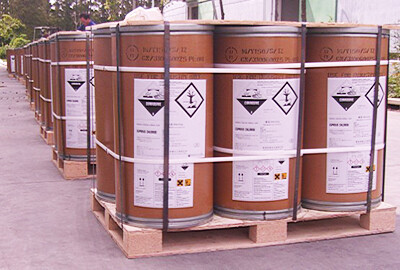
Buying Cuprous Chloride in bulk reduces delivered cost when lower material prices and freight savings outweigh the added costs of financing, storage, handling, and potential quality loss. The right purchasing volume is therefore not necessarily the largest available shipment. It is the quantity your operation can receive, protect, and consume economically.
For procurement teams, a cheaper quotation can be tempting—especially when freight costs are volatile. But the useful comparison is not simply price per kilogram purchased. It is total cost per usable kilogram delivered to production.
Put both quotations on the same cost basis
Before comparing a small order with a bulk shipment, align the specification, packaging, destination, payment terms, and Incoterms rule, including the named place. An EXW price and a CIF price do not cover the same costs; even CIF generally leaves import clearance, duties, and onward delivery to the buyer.
A practical calculation is:
Effective cost per usable kg = (material cost + logistics and import costs + inventory and storage costs + other unrecovered costs) ÷ usable quantity.
If expected deterioration or rejection reduces usable quantity, reflect that in the denominator rather than counting the same material loss twice. Include disposal or rework expenses separately where relevant.
- Material: quoted price, volume discount, packaging charges, and payment-related costs.
- Logistics: origin handling, freight, insurance, customs brokerage, destination charges, and delivery to your site.
- Import costs: applicable duties and nonrecoverable taxes. Recoverable taxes may still create a financing burden.
- Inventory: working capital, warehouse space, additional handling, and quality-control expenses.
This approach often reveals why an attractive bulk price does not automatically produce a lower operating cost.
Where bulk Cuprous Chloride purchasing actually saves money
Bulk orders tend to work best when demand is predictable and logistics costs contain a substantial fixed component. Documentation, brokerage, and certain handling charges may be spread over more kilograms. Freight rates can also improve at shipment-size thresholds, although container payload, carrier acceptance, and destination handling requirements must be checked.
The savings are rarely linear. Moving from several small shipments to one consolidated load may deliver a meaningful reduction. Adding more material beyond that efficient loading point may offer little benefit while extending stock coverage by months.
Ask suppliers or forwarders to quote several realistic quantities—not just the smallest order and a full-container option. Compare annual purchasing plans against the same consumption volume so that a larger shipment is not mistaken for a saving merely because it buys more stock.
A simple break-even test
Consider an illustrative comparison, not a market quotation. Your plant consumes 12,000 kg annually. Buying that annual requirement through larger, less frequent shipments would save $0.18/kg in material and logistics costs, or $2,160. If the larger-order strategy adds $1,500 in annual financing, storage, and handling expenses, its net advantage is only $660 before quality risk.
If expected additional quality losses or other unrecovered costs exceed $660, the bulk strategy no longer wins. The break-even point is where the savings from a proposed order size equal its incremental costs. Run the calculation at several volumes and stress-test it against slower consumption or delayed production.
Protect usable yield, not just warehouse stock
Cuprous chloride is sensitive to air and moisture exposure, which can affect material condition and suitability for use. A bulk purchase should not force repeated opening of one large package if production consumes only small amounts at a time.
Bulk purchasing does not have to mean oversized individual packs. A larger shipment containing appropriately sized, sealed packages may preserve logistics savings while limiting exposure during dispensing.
Before increasing order size, confirm:
- The supplier’s recommended storage conditions, shelf life or retest interval, and packaging suitability for the intended transit route.
- Whether package sizes match production withdrawals and your approved resealing procedures.
- How incoming inspection and retained samples will be managed.
- Whether your site can meet applicable storage, handling, and transport requirements, using the current safety data sheet and local regulations.
For high-purity applications, review more than the assay. Moisture, relevant metallic impurities, and lot consistency can influence process performance. A lower purchase price offers little comfort if the material creates extra testing or production disruption.
Use supplier consistency to support the volume decision
A larger commitment places more weight on the supplier’s manufacturing controls and export execution. Request batch certificates of analysis, agreed test methods, packaging details, production lead times, and clear procedures for handling nonconforming deliveries.
Hong Kong Rongjian Chemical Co., Ltd. connects international buyers with its parent company, Shanghai Rongjian Chemical Plant. Its stated high-temperature production capability delivers cuprous chloride purity above 99%, with heavy-metal impurities controlled within 50 ppm. Buyers should confirm the applicable specification, impurity definitions, and batch documentation against their own process requirements before committing to volume.
Where consumption is uncertain, discuss scheduled releases or staged deliveries instead of immediately taking all stock. Clarify pricing, storage charges, ownership, and payment timing: these arrangements can reduce on-site inventory, but their economics depend on the contract.
The strongest bulk-buying decision is one that survives a less optimistic forecast. If demand slows, freight changes, or stock remains unopened longer than expected, the order should still make financial and operational sense.