


Leave A Reply
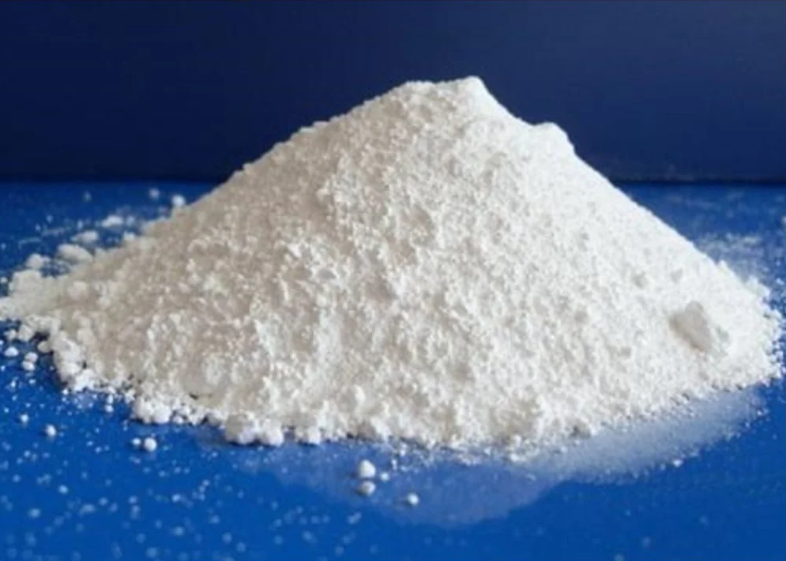
In biopharmaceutical development and manufacturing, a small amount of the wrong impurity can matter as much as a major process variable. This is especially true when a chemical is used to create a reactive linker, construct a drug-delivery polymer, or support a late-stage transformation for a high-value intermediate. Cuprous Chloride (CuCl) is not usually a therapeutic ingredient itself, but it has several important enabling roles across pharmaceutical and biopharmaceutical workflows.
Its value comes from the chemistry of copper in the +1 oxidation state. Cuprous Chloride can form useful catalytic complexes, participate in selective bond-forming reactions, and support controlled polymerization processes. For teams working with sensitive molecules, however, the choice of Cuprous Chloride is never simply about obtaining a copper salt. Purity, trace-metal profile, handling behavior, lot consistency, and the ability to remove residual copper from the final process stream all deserve close attention.
Where Cuprous Chloride Fits in the Biopharmaceutical Value Chain
The word “biopharmaceutical” often brings to mind cell culture, fermentation, proteins, antibodies, and sterile filling. Yet many modern biologic products also rely on sophisticated chemical steps. Antibody-drug conjugates, peptide conjugates, diagnostic probes, nucleic-acid delivery systems, and polymer-based formulations all sit at the interface of biology and organic chemistry.
Cuprous Chloride is most relevant on the chemical side of that interface. It may be used as a catalyst, catalyst precursor, or reagent in the preparation of functional intermediates rather than being carried into the final medicinal product. In a well-designed process, it is introduced for a defined transformation and subsequently removed through purification, metal scavenging, phase separation, chromatography, filtration, or other validated downstream operations.
This distinction is important. Cuprous Chloride can be highly useful in the manufacturing route, while residual copper must remain controlled in accordance with the product’s quality requirements and applicable regulatory expectations.
Cu(I)-Catalyzed Click Chemistry for Bioconjugation
One of the most recognized roles of Cuprous Chloride in biopharmaceutical chemistry is its relationship to copper-catalyzed azide-alkyne cycloaddition, commonly called CuAAC or copper-catalyzed click chemistry. This reaction joins an azide group and a terminal alkyne to form a stable 1,2,3-triazole linkage.
That linkage is valued because it is robust, predictable, and compatible with a broad range of functional molecules. In bioconjugation work, click chemistry can be used to connect small-molecule payloads, fluorescent labels, targeting ligands, polymers, imaging agents, or other functional components to a larger biomolecular platform.
Cuprous Chloride may serve as a practical source of Cu(I) for catalytic systems used in these reactions. Depending on the chemistry, it can be paired with suitable ligands and reaction conditions designed to maintain copper in its active state. The reaction itself can offer a comparatively direct route to complex constructs that would otherwise require several protecting-group manipulations or less selective coupling strategies.
For example, a development team may need to attach a reporter molecule to a peptide-derived probe without disturbing another reactive handle in the same structure. A click-based approach can provide useful chemoselectivity when the azide and alkyne groups have been deliberately incorporated into the synthesis plan.
Why Residual Copper Control Cannot Be an Afterthought
While CuAAC is powerful, it also illustrates the central quality challenge associated with copper chemistry. Free or poorly controlled copper may promote oxidation or damage susceptible biomolecules. Proteins, peptides, nucleic acids, and certain drug payloads can be sensitive to metal-catalyzed degradation. The catalytic step therefore has to be considered together with the workup and purification strategy.
Process developers typically assess questions such as:
- Can the reaction proceed at a low enough copper loading to support efficient downstream clearance?
- Which ligand gives adequate catalytic activity without making copper removal more difficult?
- Does the product remain stable during reaction, quench, and purification?
- Are metal scavengers, chelating resins, or other removal methods compatible with the molecule?
- Can residual elemental impurities be monitored reliably in the final intermediate or drug substance?
In other words, a successful click reaction is not merely one that reaches high conversion. It is one that produces a clean, reproducible material with a realistic route to metal control at scale.
Controlled Polymer Synthesis for Advanced Delivery Platforms
Cuprous Chloride also has a meaningful place in controlled radical polymerization, particularly atom transfer radical polymerization (ATRP). In ATRP systems, copper complexes shuttle between oxidation states to regulate the growth of polymer chains. This control can make it possible to prepare polymers with targeted molecular weights, narrower molecular-weight distributions, and defined end groups.
These attributes matter in pharmaceutical and biopharmaceutical applications because polymer architecture can influence how a formulation behaves. Functional polymers may be explored in drug-delivery research, surface modification, biomaterial design, nanoparticle systems, and conjugation platforms. End-functionalized chains can later be coupled to peptides, proteins, saccharides, or small-molecule ligands.
The role of Cuprous Chloride in such work is not simply “to make a polymer.” It supports a controlled synthetic environment in which chain growth, functionality, and reproducibility can be better managed. For a developer designing a polymeric carrier, the ability to tune those variables may affect solubility, circulation behavior, loading capacity, or compatibility with the selected active ingredient.
At the same time, polymer applications create their own copper-removal challenges. Copper can associate with polymer matrices or coordinating groups, which means that purification should be planned from the earliest laboratory stage. A material that performs well on a small scale but retains difficult-to-remove metal residues may become impractical for further development.
Use in the Synthesis of Pharmaceutical Building Blocks
Beyond bioconjugation and polymer chemistry, Cuprous Chloride is used in broader fine-chemical synthesis where complex pharmaceutical intermediates are prepared. Copper(I)-based catalytic systems can support carbon–carbon, carbon–nitrogen, carbon–oxygen, and carbon–halogen bond-forming transformations, depending on the substrate, ligand, solvent, and reaction design.
In a biopharmaceutical supply chain, these transformations may be relevant to the preparation of linker fragments, protected amino-acid derivatives, heterocyclic motifs, activated handles, specialty monomers, or small-molecule payload intermediates. The exact role varies widely from route to route. In some cases, Cuprous Chloride acts as a catalyst precursor; in others, it is part of a reagent system used to achieve a desired selectivity or conversion profile.
For medicinal chemistry and process chemistry teams, copper-mediated routes can be attractive when they reduce synthetic steps, avoid harsher alternatives, or provide access to structures that are otherwise difficult to obtain. But route selection must balance that advantage against the practical cost of catalyst handling, oxygen sensitivity, and downstream metal clearance.
Purity Matters More When the Chemistry Is Sensitive
Not every grade of Cuprous Chloride is equally suitable for advanced pharmaceutical-related synthesis. Cuprous Chloride can be susceptible to oxidation and can contain inorganic contaminants introduced through raw materials, production methods, storage, or packaging. In a process where copper is used at low loading, an unexpected impurity may still influence reaction behavior—particularly when the product is complex, the reaction window is narrow, or the substrate is highly valuable.
Heavy-metal impurities deserve particular scrutiny. They may interfere with catalytic performance, complicate elemental impurity testing, or create an additional burden for downstream purification. For high-value intermediates, the cost of a failed batch is rarely limited to material loss; development timelines, analytical investigations, and customer supply commitments may also be affected.